Discovering Who We Are: From Data Analysis to Emotional Management
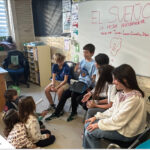
How does a math graph about sugar connect to Maslow’s Pyramid? At Colegio Juan de Lanuza, the answer lies in our latest 6th Grade Unit of Inquiry: “Who we are”. We have closed the term with a deeply holistic perspective, integrating mind, body, and emotions to understand comprehensive wellbeing.
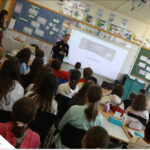
Deep Research and Data – The project began with a solid foundation of research. Through paired presentations, students inquired into different types of wellbeing (physical, mental, social, economic). It was fascinating to see how, on their own initiative, some groups linked these concepts to basic human needs and Maslow’s Pyramid, elevating the level of class debate.
This rigor was transferred to Mathematics and Physical Education, where they “grounded” the theory: they analyzed their daily sugar consumption, created percentage graphs, and reflected on how this “fuel” directly affects their energy and athletic performance.
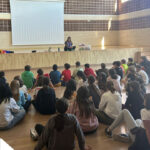
Experts in the Classroom – To understand our bodies, we had exceptional guests. Dr. Jose Luis Cabrerizo, a cardiologist and school parent, taught us how to care for our circulatory system. In Science, students amplified this learning about the nervous system by creating their own collaborative podcasts.
On the other hand, the National Police visited the classrooms to address wellbeing from a safety perspective, fostering critical thinking in Values regarding the ethical use of social media.
Art, Music, and Communication – Wellbeing is also about feeling and expressing. In Music, they experimented with music therapy as a self-regulation tool, and in Art, they designed infographics that combined aesthetics with scientific rigor. In Language, all this information was transformed into journalistic reports on healthy habits.
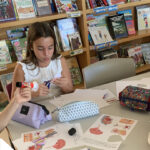
The Grand Finale: The Health Fair This entire process culminated in a generous Health Fair, where our 6th Grade students shared their learning with 1st Grade students. Watching them explain complex concepts to the younger ones was the definitive proof that they have internalized the message: taking care of oneself is the first step to taking care of others.